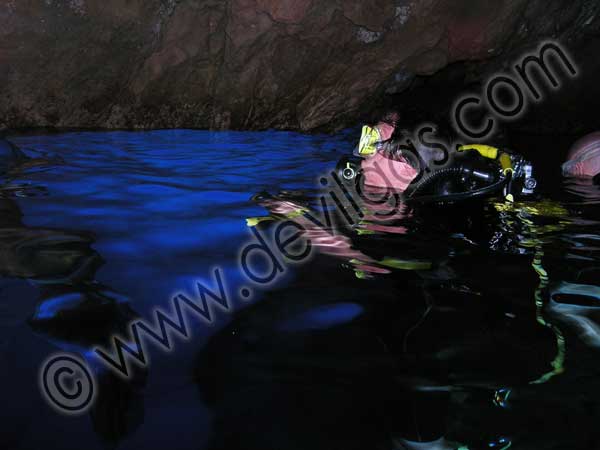
Diving in Mallorca / Majorca
This is by no means anywhere near a complete guide to diving in Mallorca (nor
is it meant to be), it will give a brief overview of some of the sites we've
dived in numerous visits over the years and perhaps give a few tips on how to
get the best out of your dive experience there.
Water Temperatures
In July '06, the temp was 28-30°c at the surface, the first thermocline
being at about 18m dropping the temp to around 24°c. The next thermocline
was at around 25m, dropping the temp to around 21°c. I used my trusty 3mm
shorty which was sufficient. Without the 2nd thermocline, I'd have been more
than happy to dive in shorts and a T-shirt.
Later in the year (October), the temps drop to around 21°c at the surface,
with thermoclines taking the temp down to about 18°c at depth.
Our latest trip in October '08 saw a constant 23°c from the surface to 35m.
June is similar with temps of 24°c at the surface and around 19°c at
depth.
I've never dived in anything other than a shorty in Mallorca, however if you
feel the cold, then the choice is yours as to what suit you require.
General
If you're an experienced diver and have preferences over what types of dive
you'd like to do, check in advance whether the centre you intend to dive with
can accommodate your preferences within a group of divers with a similar experience
level to yourself.
On one visit, I'd requested certain types of dive in advance. The cavern stuff
was accommodated, the wrecks weren't. I feel this was due to sharing a boat
with other centres having less experienced divers on board. Selfish attitude?
Hell yes! I'm paying for diving
I'd like to do. The final day of the
3 day pack saw us doing a particular site for the 2nd time (out of 6 dives)
and what seemed to be a 'fit one in on the way home' dive. This was a shame
as otherwise the centre would've had another pair of 3 day dive packages out
of us.
One centre we've used (MAD) give you free nitrox and also provide a free pick
up and drop off service to where you're staying (within reason). Both of these
are very welcome touches.
In October '08 we once again dived with Giosue and Kirsten at Big Blue. Sadly the experience level of other customers precluded doing the Palma wrecks,
however Giosue was good enough to explain this before we'd started any diving so not being able to dive the wrecks (again!) was anticipated, but still
a downer.
The Diving
Having a base in Torrenova (the hilly end of Punta Balena in Magalluf) has meant
that all our diving has been in the South West of the island. This is reputed
to offer the best diving on the island although I wouldn't like to pass judgment
- the caves of Drach must be awesome to dive - without having tried anywhere
else.
The Mallorcan authorities have now designated certain areas (El Toro & Malgrats)
as marine reserves where fishing is prohibited. This shows as the life in these
areas has increased quite nicely.
Wafting your hand over the seaweed at most sites will reward you with a load
of inquisitive wrasse and other fish looking for morsels to eat - an easy way
to attract the fish if you've a camera with you.
The caves / caverns depicted on the following sites are very much in the touristy
'ooh look, I'm in a cave' bracket and would be rightly sneered at by any self
respecting cave diver. No doubt, there are specialist cave dive centres on the
island and a bit of digging would uncover them if this is your lien.
The diving I've experienced so far is the 'follow my leader' style, which is fine
if you specifically want to see something and don't know how / where
to find it.
Personally, I prefer a dive brief and the option to get on with it myself. I
can understand the reasons for guided diving (control and maybe some strange
Spanish legislation) but find it is restrictive.
The diving in this part of the island is very much geared towards holidaymakers
who want to do a spot of diving rather than divers on an out-and-out diving
holiday. You need to bear this in mind when deciding which part of the island you'd like to dive, the availability of dive sites and the dive difficulty.
Prices
All dive centres will offer a good range of PADI courses and are especially geared towards those new to diving. For course prices, check the links on the right.
Typically, a dive including all of the gear will be around 45 euros (2008) based on a '2 tank dive'. A '2 tank dive' is 2 back to back dives (with a short
surface interval). For those taking their own gear, you should expect to pay about 10-15 euros less per dive. 6 and 10 dive packages are usually available
with dives working out around 30 or so euros each. All the prices above are for boat dives.
Discover Scuba try-dives are priced at about 80 euros.
Malta or Mallorca?
Me, I'd go for Mallorca every time, just experience different parts of the islands. Malta does have some very nice dives but the marine life in Mallorca
is just so much more.
---
El Toro
This
site offers numerous dives. The east gives easy, platformed, multi level diving
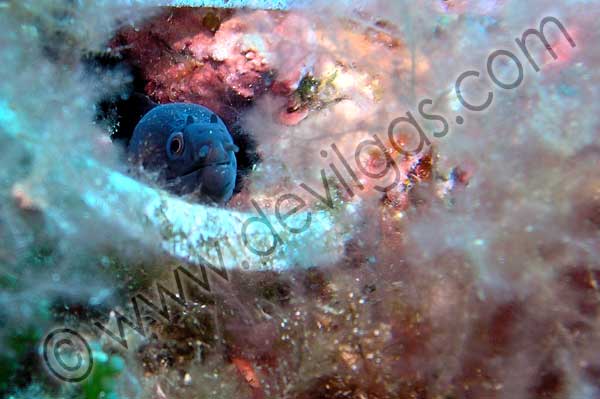
and makes an ideal check out dive. You should get to see moray eels, octopus,
conger eels and God knows what fish. It's usual to see barracuda in shoals of
up to 100 or so fish. Don't be afraid to approach them, they look worse than
they are! Keep your eyes open for scorpion fish hiding amongst the rocks and
don't forget to look for the smaller stuff such as nudibranchs. They'll be there
somewhere, brightly coloured. Goatfish are another common species found in the
waters of Mallorca. Sand sifting will attract these fish as well as blennies,
wrasse etc.
In one section. between the large rock blocks, large pieces of urn may be found. Whether these are the remnants of a long lost shipwreck or something
just slung in to attract attention isn't known, but if you can find them, they make an interesting diversion.
The
west side of the island, to me, provides the better diving. Again, morays, octopus
and barracuda are on the menu. You'll see shoals of bream, damsel fish, jacks
and can watch grunts locusting across the sea grass. Wrasse and blennies can
be found hugging the rocks and looking carefully under the ledges may even yield
a lobster or two.
Towards
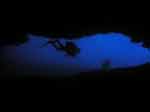
the end of the dive, visit the small cave in about 5m of water. It's located
just beneath the landing ladder for visiting boats and can make an easy introduction
to restricted surface diving.
There is a central rock which you can swim around and what appears to be another,
very narrow, exit from the cave. The 'dark' side of the centrepiece is home
to shrimp (look in the well behind the central rock) and gives a pleasing view
out of the window into the blue.
Both sides of the island allow dive depths from a few metres to 40m+, although
beyond 40-45m there isn't that much of interest to see.
---
Punta Cautius
A nice dive which features large gullies and plays host to numerous caves and
small tunnels. Fish life is similar to El Toro with scorpion fish making regular
sightings. Take time out to watch the shimmer at the first thermocline interface.
Average site depth is around 20m and going much deeper than this isn't really
necessary.
---
Malgrats
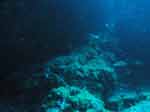
Again,
a site that offers multiple dive options and is within a marine reserve.
Fish life is similar to El Toro although this site has something special. At
around 25m, and semi-hidden amongst large boulders, you can find a mermaid!
Thankfully, if that's the right word, this hadn't been placed here as some
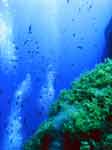
gimmicky tourist attraction, but was placed by a group of divers who'd lost
a friend in a cave diving accident elsewhere on the island. As a fitting tribute,
the friends arranged for this statue and plinth to be placed at the divers favourite
dive site - Malgrats.
Marine growth has very much camouflaged the mermaid and all but rendered the
plinth unreadable, however the statue will long be a part of this site and makes
a worthwhile visit.
As with most dives in this area of the island, sea grasses are common and give
the sites a 'carpeted' look.
---
El Sech
El Sech is a small island around the coast from Magalluf. It can make an interesting
dive (I've not dived it for about 6 years though, so this may be a bit different
now) as it hosts 2 wrecks and is also visited by the Nemo tourist submarine.
The wrecks, one is at 18m the other about 25m, are very much broken up, although
they are covered in marine life. Fish life was pretty decent on the shallower
wreck, but I think this was due to the diving 'actors' that would feed the fish
ready for the submarine customers.
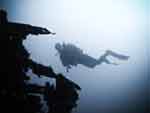
You're not supposed to go close to the sub, however mild amusement can be had
in approaching from below, removing your mask and valve and floating dead eyed
past a porthole. I won't mention a spanner and bag of bolts.
It was weird being watched and photographed by a can full of people while you're
down there watching and possibly photo'ing the marine life.
Update.... We dived El Sech again in October '08, heading directly for the deeper wreck. There is one book that details this site, showing an intact wreck.
It must've been shot a long time ago as what is left of the wreck is very different now! The wreck is
very broken up, not your typical pile-of-plates-on-the-floor UK broken up wreck, but resembling something akin to the Carnatic in the Red Sea with lots
of spars etc. What is there is very photogenic and definitely worth a visit if you're a budding photographer. Marine life is significantly less than can
be found at the marine reserves, however keeping a look out
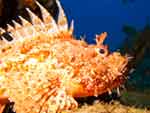
amongst
the wreckage can yield scorpionfish, morays and octopus. If you're very lucky, you may get to see an eagle ray on your return swim, however these are
very much the exception rather than the norm.
El Sec is an easy multi-level dive with your boat typically being moored above the 5-6m plateau that circles the island. Steps lead down the various levels
until you reach the shallow slope that leads to the wreck.
---
Cave of the Madonna
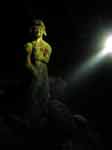
Another
site where you'd be forgiven for thinking the statue was purposely placed there
as a tourist attraction. I'm told that the Madonna was placed there by a diver
at the bequest of a local fisherman. His reasons being simply to say "Thankyou"
to the sea for being kind to him.
The dive....drop into the water and swim along the wall until you see the top
of the cavern in about 5m depth. Swim into the cavern and you can then surface
into a chamber.
The water is:-
a) colder than outside during the summer
b) warmer than outside during the winter
and is fresh.
From the surface in this cave, you can see the blue outside. Descend again to
the bottom of the cavern where you will find the statue of the Madonna at about
18m depth. From here, you exit the cavern and lose yourself amongst numerous
huge boulders with their own swimthroughs. As with most dive sites in this area,
sea grass is predominant and gives a very green look to the scenery. As with
El Toro, depths slowly shelve out to 50m+.
---
Punta s'Estaca
A shallow dive site (15m or so) which contains 2 safe caves on which cave newbies
can cut their teeth. If the viz appears to drop off in the caves, this is because
they're filled with shrimp. Exiting the caves and you simply follow gullies
etc looking out for the usual marine life. With this area not having a fishing
ban, what you get to see will be small stuff. As far as depths go, this site
is typical of numerous others in Mallorca whereby you start in around 10m and
can work your way to 40m+. As with other sites, going deeper than about 30-35m
isn't really necessary.
---
Wrecks
For wreck aficionados, there are 2 sites that are a must - the wrecks outside
of Palma at El Dique del Oeste (the coastline also boasts underwater caves)
and the c500BC Phoenician wreck at Almagro.
The El Dique del Oeste wrecks consist of a 100m long cargo ship and 2 smaller trawlers. All 3 wrecks can be visited in one dive as they are virtually
nose to tail. All 3 are
very silty so care must be taken to not stir this too much.
The smaller trawlers are worth a cursory look over but your time is best spent exploring the largely intact cargo ship. There are plenty of swimthroughs
and plenty of opportunities to get lost!
To do all 3, start at the stern of the large wreck, proceed to the bow where
you'll see the 2nd wreck. Head right to the stern of the 2nd, then double back
to the bows. Swim about 20-30m or so from the bow of #2 and slightly to the
left (sorry, no bearings - I've not dived these since 2002) and you should see
the bows of the 3rd wreck. Make your way along this ship towards the stern.
At the stern, head left (swimming off the wreck) and you should get back to
the first wreck at about amidships.
Maximum depth is around 30-32m and the viz is generally poor due to the proximity of the Palma shipping lanes. The first time we dived them, we had exceptional
viz of about 15-20m, the more usual is about 4-6m, even less when the silt screen has been activated. Apparently there is a 4th cargo ship of similar
proportions to the main of these 3, although where exactly that ship is, I have no idea.
Unfortunately, dive centres are reluctant to visit these wrecks as, being blunt, the majority of the clientele aren't up to the challenges posed by the
very different conditions encountered in this busy section of water compared to the other dive sites offered in this area of the island. If you are fortunate
enough to be with a group with sufficient experience then you may get lucky.
The other wreck dive that is a must is the Almagro wreck. Sure, it looks like
you've just dropped 36m onto a large rock in the middle of a sandy seabed. That
large rock is what is left of the wreck, heavily encrusted with marine life.
What does make this dive worthwhile is gently sifting the sand. Chunks of 2500
year old amphora can be easily found, although taking them is illegal. Our last
dive here had the most vivid blue water I've ever seen while diving. It's a
must as it's rare that you'll ever get the chance to dive a wreck
this
old without violating some exclusion zone.
There are other wrecks around Majorca, however having not dived them, it would
be inappropriate to include them here.

 This
site offers numerous dives. The east gives easy, platformed, multi level diving
and makes an ideal check out dive. You should get to see moray eels, octopus,
conger eels and God knows what fish. It's usual to see barracuda in shoals of
up to 100 or so fish. Don't be afraid to approach them, they look worse than
they are! Keep your eyes open for scorpion fish hiding amongst the rocks and
This
site offers numerous dives. The east gives easy, platformed, multi level diving
and makes an ideal check out dive. You should get to see moray eels, octopus,
conger eels and God knows what fish. It's usual to see barracuda in shoals of
up to 100 or so fish. Don't be afraid to approach them, they look worse than
they are! Keep your eyes open for scorpion fish hiding amongst the rocks and  don't forget to look for the smaller stuff such as nudibranchs. They'll be there
somewhere, brightly coloured. Goatfish are another common species found in the
waters of Mallorca. Sand sifting will attract these fish as well as blennies,
wrasse etc.
don't forget to look for the smaller stuff such as nudibranchs. They'll be there
somewhere, brightly coloured. Goatfish are another common species found in the
waters of Mallorca. Sand sifting will attract these fish as well as blennies,
wrasse etc. 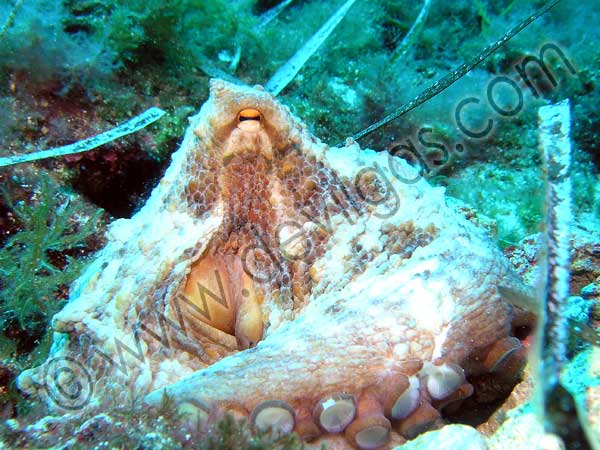 The
west side of the island, to me, provides the better diving. Again, morays, octopus
and barracuda are on the menu. You'll see shoals of bream, damsel fish, jacks
and can watch grunts locusting across the sea grass. Wrasse and blennies can
be found hugging the rocks and looking carefully under the ledges may even yield
a lobster or two.
The
west side of the island, to me, provides the better diving. Again, morays, octopus
and barracuda are on the menu. You'll see shoals of bream, damsel fish, jacks
and can watch grunts locusting across the sea grass. Wrasse and blennies can
be found hugging the rocks and looking carefully under the ledges may even yield
a lobster or two. 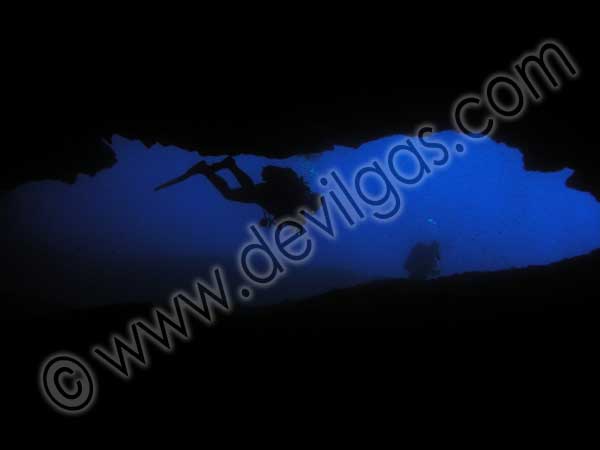 Towards
the end of the dive, visit the small cave in about 5m of water. It's located
just beneath the landing ladder for visiting boats and can make an easy introduction
to restricted surface diving.
Towards
the end of the dive, visit the small cave in about 5m of water. It's located
just beneath the landing ladder for visiting boats and can make an easy introduction
to restricted surface diving.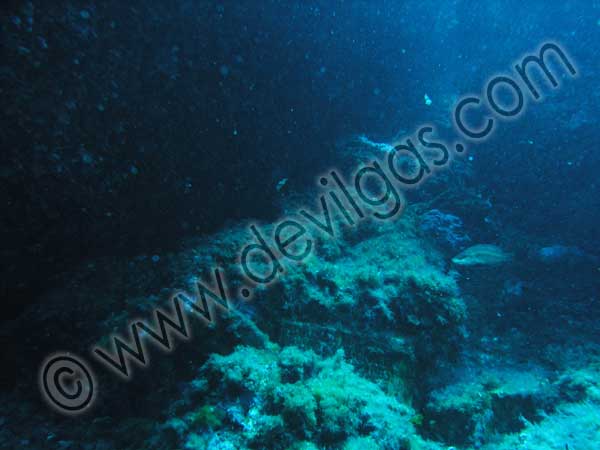 Again,
a site that offers multiple dive options and is within a marine reserve.
Again,
a site that offers multiple dive options and is within a marine reserve. 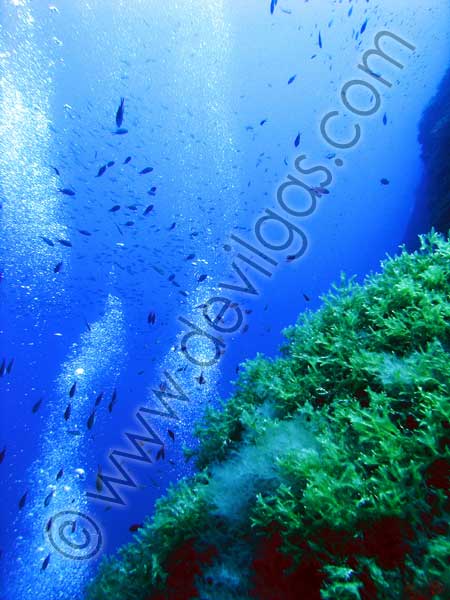 gimmicky tourist attraction, but was placed by a group of divers who'd lost
a friend in a cave diving accident elsewhere on the island. As a fitting tribute,
the friends arranged for this statue and plinth to be placed at the divers favourite
dive site - Malgrats.
gimmicky tourist attraction, but was placed by a group of divers who'd lost
a friend in a cave diving accident elsewhere on the island. As a fitting tribute,
the friends arranged for this statue and plinth to be placed at the divers favourite
dive site - Malgrats. 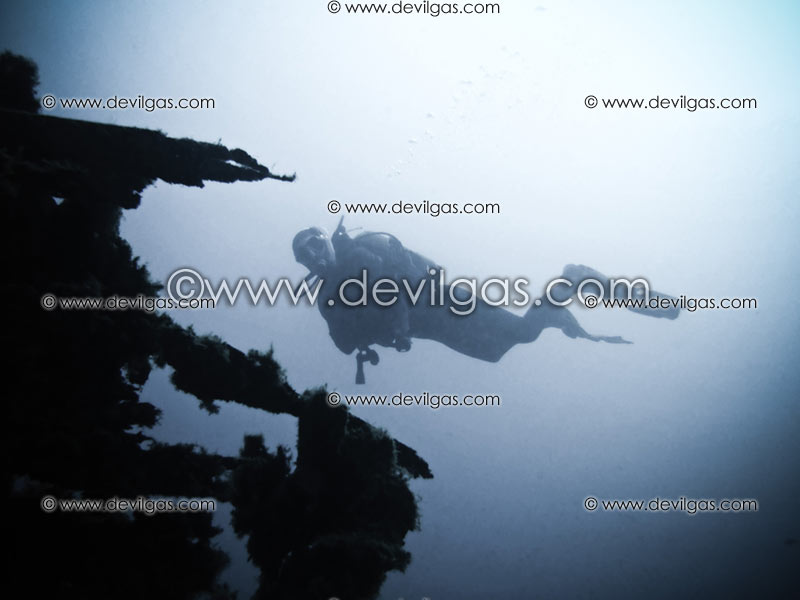 You're not supposed to go close to the sub, however mild amusement can be had
in approaching from below, removing your mask and valve and floating dead eyed
past a porthole. I won't mention a spanner and bag of bolts.
You're not supposed to go close to the sub, however mild amusement can be had
in approaching from below, removing your mask and valve and floating dead eyed
past a porthole. I won't mention a spanner and bag of bolts. 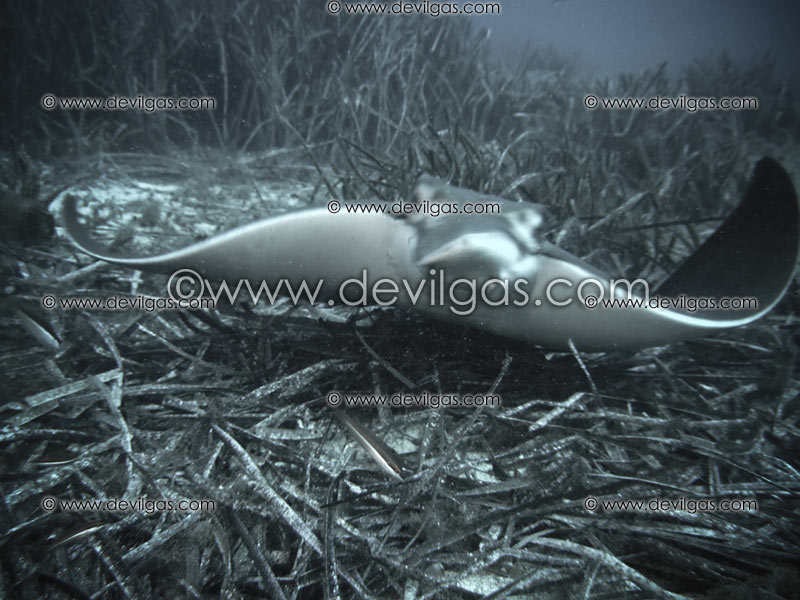 very broken up, not your typical pile-of-plates-on-the-floor UK broken up wreck, but resembling something akin to the Carnatic in the Red Sea with lots
of spars etc. What is there is very photogenic and definitely worth a visit if you're a budding photographer. Marine life is significantly less than can
be found at the marine reserves, however keeping a look out
very broken up, not your typical pile-of-plates-on-the-floor UK broken up wreck, but resembling something akin to the Carnatic in the Red Sea with lots
of spars etc. What is there is very photogenic and definitely worth a visit if you're a budding photographer. Marine life is significantly less than can
be found at the marine reserves, however keeping a look out 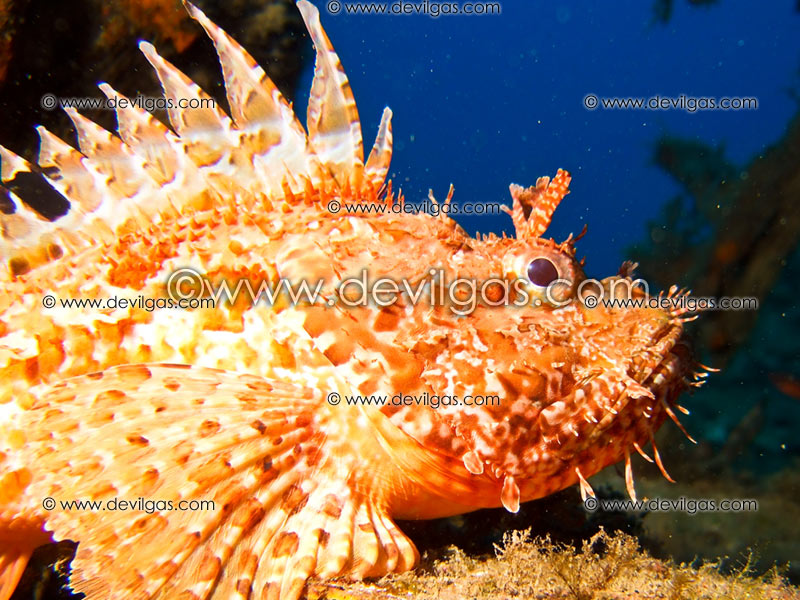 amongst
the wreckage can yield scorpionfish, morays and octopus. If you're very lucky, you may get to see an eagle ray on your return swim, however these are
very much the exception rather than the norm.
amongst
the wreckage can yield scorpionfish, morays and octopus. If you're very lucky, you may get to see an eagle ray on your return swim, however these are
very much the exception rather than the norm.
 Another
site where you'd be forgiven for thinking the statue was purposely placed there
as a tourist attraction. I'm told that the Madonna was placed there by a diver
at the bequest of a local fisherman. His reasons being simply to say "Thankyou"
to the sea for being kind to him.
Another
site where you'd be forgiven for thinking the statue was purposely placed there
as a tourist attraction. I'm told that the Madonna was placed there by a diver
at the bequest of a local fisherman. His reasons being simply to say "Thankyou"
to the sea for being kind to him.